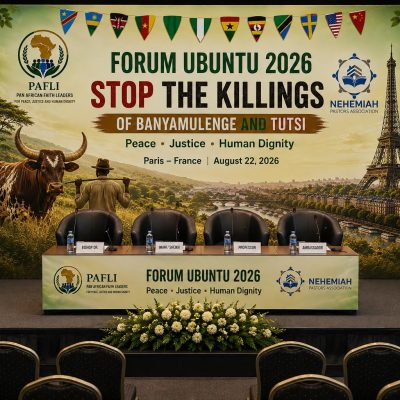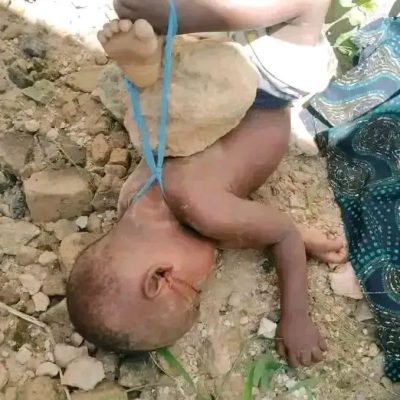
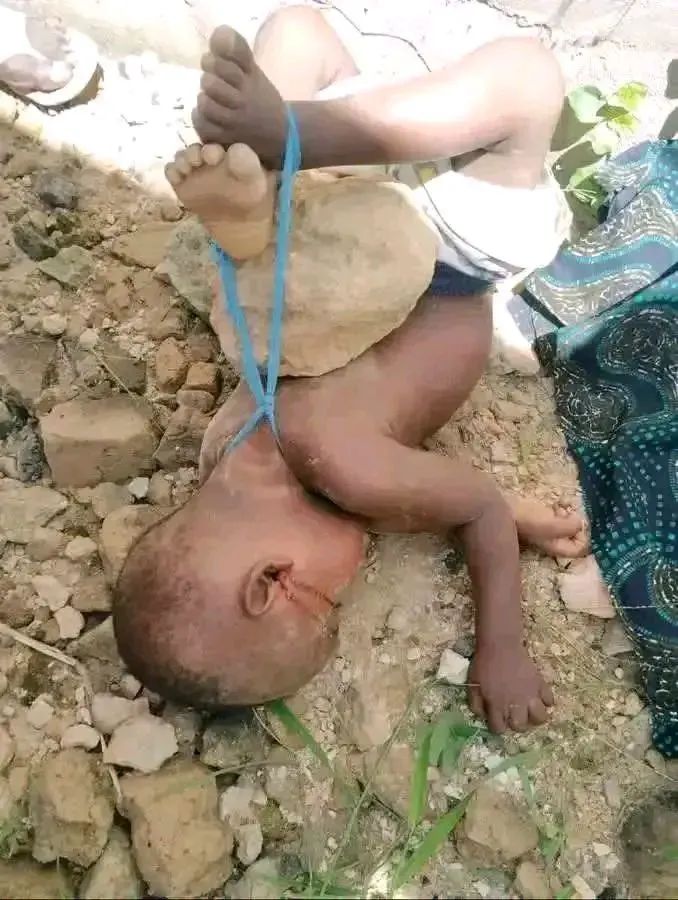
For years, the people of Minembwe and other parts of South Kivu Province, DRC where Banyamulenge lived simple lives. They cultivated their fields, raised their cows, raised their children, traded in nearby markets, and dreamed of a future where peace would allow them to prosper. Today, those dreams have been replaced by fear, hunger, and uncertainty.
The Banyamulenge people are facing what many observers describe as a systematic campaign of persecution and destruction. Reports from survivors paint a horrifying picture of targeted killings, sexual violence, economic strangulation, and the deliberate isolation of an entire population.
The world must not ignore what is happening.
Every day, families in Minembwe wake up not knowing whether they will survive until nightfall. Drones constantly circle above and bomb to villages, creating an atmosphere of terror and loss of many innocent lives. Parents fear sending their children outside. Farmers are afraid to work in their fields. The sound of aircraft overhead has become a symbol of danger rather than technology.
According to testimonies collected from displaced residents, the attacks are not random. Villages inhabited by Banyamulenge people and Congolese Tutsi have reportedly been singled out repeatedly. Entire communities have been emptied as residents were Killed and others flee for safety. Those unable to escape—particularly the elderly, the sick, and young children—are often left trapped in areas where access to food and medicine has nearly disappeared.
Women and girls have suffered tremendously. Survivors speak of widespread sexual violence used as a weapon of intimidation and humiliation. Families have been torn apart, not only by death but also by trauma that may take generations to heal. Mothers who once cared for thriving households now struggle to protect their children from hunger and violence.
Yet the attacks themselves are only one part of the crisis.
Perhaps the most devastating aspect of the situation is the siege imposed on Minembwe. Every major road leading into the region has been blocked. Commercial transport has stopped. Humanitarian supplies cannot enter freely. Traders who once brought essential goods no longer travel the routes because of insecurity and restrictions.
As a result, ordinary items have become luxuries beyond imagination:
- A kilogram of sugar costs approximately $50.
- A single kilogram of salt now costs nearly $50.
- Even a simple bar of soap, something many people around the world purchase without a second thought, can cost as much as $50.
These prices are not merely statistics. They represent suffering.
- They mean mothers cannot prepare meals for their children.
- They mean families cannot maintain basic hygiene.
- They mean diseases spread more easily among populations already weakened by hunger.
- They mean people are forced to choose between eating and seeking medical care.
Hospitals and health centers run out of supplies. Patients with treatable illnesses face life-threatening consequences because medicines are unavailable or unaffordable. Pregnant women travel long distances seeking help, often finding that clinics have no drugs, no equipment, and no capacity to assist them.Children suffer the most.
Teachers report attending classrooms is not possible as Drones shoot on every gathering. Some children have fled with their families and died along the way due to lack of food. Many have witnessed violence no child should ever see. Their childhood is disappearing before their eyes.
The economic impact has been catastrophic. Farmers cannot reach markets. Merchants cannot restock goods. Families have exhausted their savings. Livestock has been Killed. What once was a functioning local economy has become a struggle for daily survival.
Community leaders describe a growing sense of abandonment and see it clearly as a Banyamulenge genocide that is being Implimented
“We feel forgotten,” one elder reportedly said. “The world knows how to speak about human rights, but who will speak for us?”
This question echoes throughout Minembwe and all Congolese Tutsis.
- How many more families must be displaced?
- How many more women must suffer abuse?
- How many more children must go hungry?
- How many more lives must be lost before the world pays attention?
The crisis in Minembwe is not only a humanitarian emergency. It is a moral challenge for the international community. When a people are targeted because of who they are, when their communities are isolated, when access to food, medicine, and basic necessities is deliberately restricted, silence becomes dangerous.
History has repeatedly shown that atrocities do not begin with mass graves alone. They begin with dehumanization. They begin with discrimination. They begin when a population is isolated and the suffering of ordinary people is ignored.
Today, the Tutsi people of DRC especially those in South and North Kivu stand at a crossroads between survival and destruction.
Their plea is simple:
- They are asking for protection.
- They are asking for access to food and medicine.
- They are asking for safe passage along blocked roads.
- They are asking for justice.
- Above all, they are asking the world not to look away.
Banyamulenge and Tutsi people in North and South Kivu do not seek sympathy alone. They seek action. They seek recognition of their humanity. They seek the opportunity to live in peace, raise their children, and rebuild the communities that violence has shattered.Whether their voices are heard may depend on whether the rest of the world chooses to listen before it is too late.